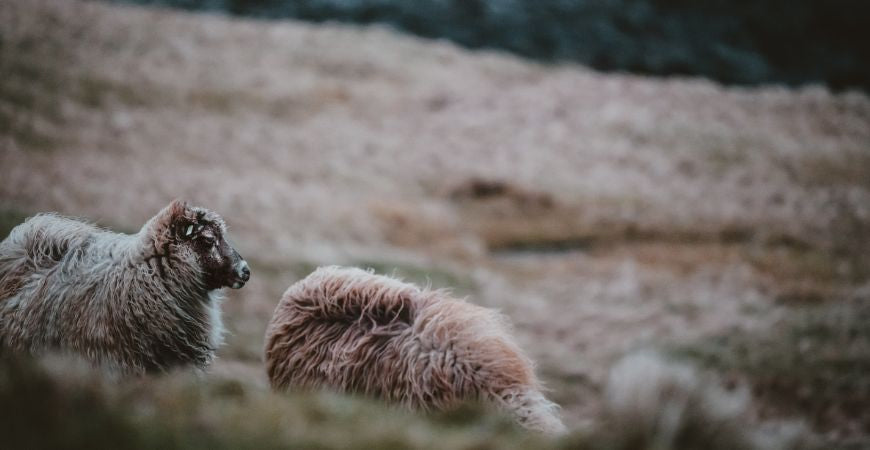


Originally, the Glen Check pattern, also known as Prince of Wales, had nothing royal about it. Woven by shepherds in Glenurquhart, in the Scottish Highlands, it served to protect against the biting wind and blend into the landscape. A discreet, almost utilitarian tartan. And yet, over time, this subtle grid pattern would conquer private lounges, Savile Row tailors, and then catwalks worldwide. The Prince of Wales, Edward VIII, with his natural elegance, wore it so often that he became its unwitting ambassador. The pattern then entered legend.
Because Prince of Wales is not just a name; it's a style. It's the style of a man with an impeccable look, attached to a certain idea of distinction. It's also the legacy of an era when fashion was a silent language, a play of codes and textures. Today, it leaves the changing rooms to invite itself into our homes, draped over a sofa, enhanced on a fine wool throw, and continues to tell, in its own way, the discreet art of elegance.

An exceptional design, between geometry and subtlety
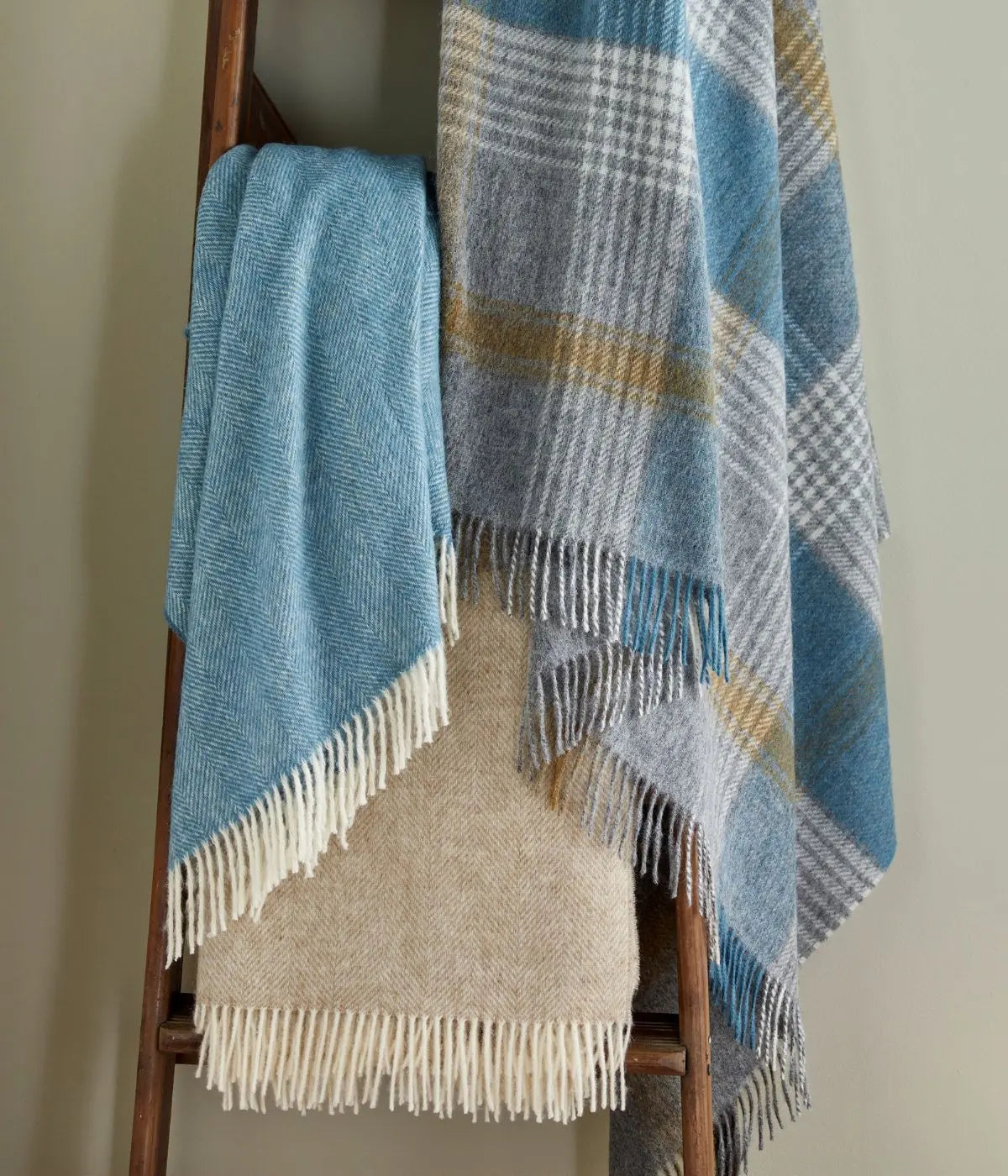
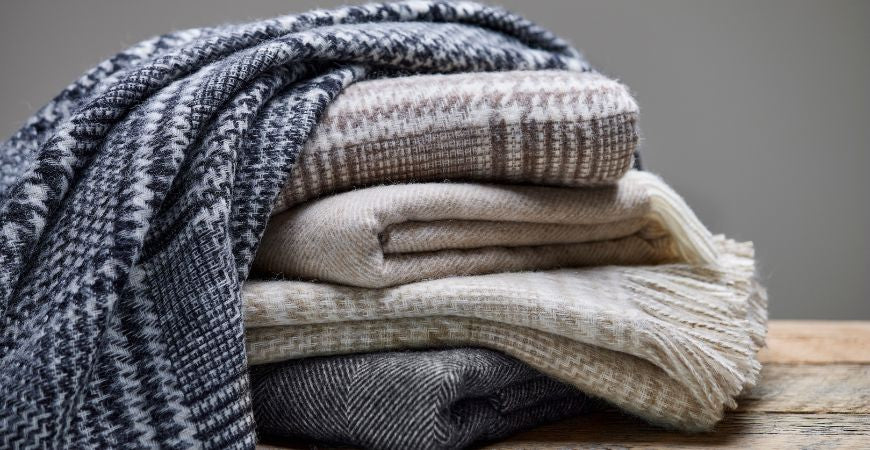
The Prince of Wales pattern consists of superimposed checks: a clever interplay of fine lines and large squares, in shades of grey, black, white, sometimes enhanced with a discreet coloured thread. The overall effect is structured, but never rigid. There is something architectural in this weave, but also something profoundly organic. A rare balance, which no doubt explains its longevity.
This pattern appeals because it is clear without being overwhelming. It creates a visual rhythm, a breathing space. It provides structure without imprisoning. It carries the memory of an assumed classicism, a style without frills, but with immense richness of texture.
From fashion to home: the Prince of Wales invites itself into our interiors
For decades, the pattern remained the preserve of three-piece suits, bespoke jackets, and impeccably tailored British suits. But in recent years, we've seen it slide from the wardrobe to interior decoration. A natural, almost obvious transition: the home, too, becomes a reflection of our personal style, our desires for grounding and beauty.
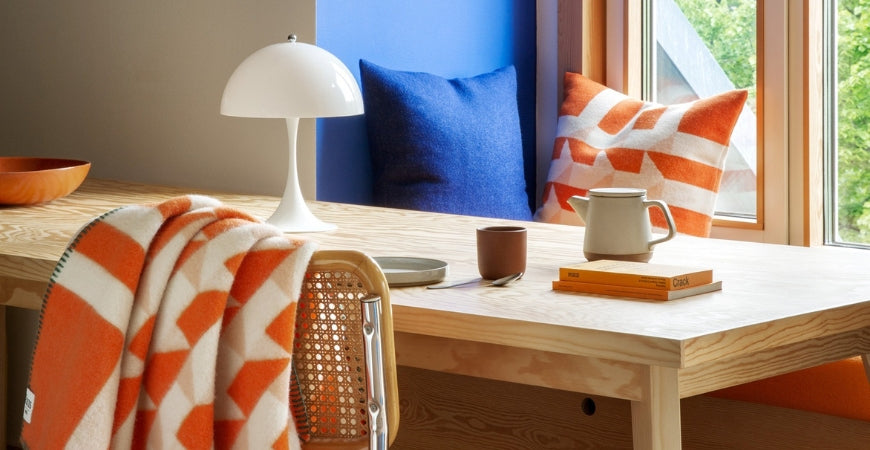
In decor, the Prince of Wales pattern acts as a graphic punctuation. It can be found on enveloping armchairs, upholstered headboards, heavy curtains framing the windows of a Haussmannian living room. It structures the space without weighing it down, asserts an atmosphere while allowing it to breathe. Its silent elegance seduces contemporary interiors in search of soul.
Softness included: when the pattern becomes an accent textile
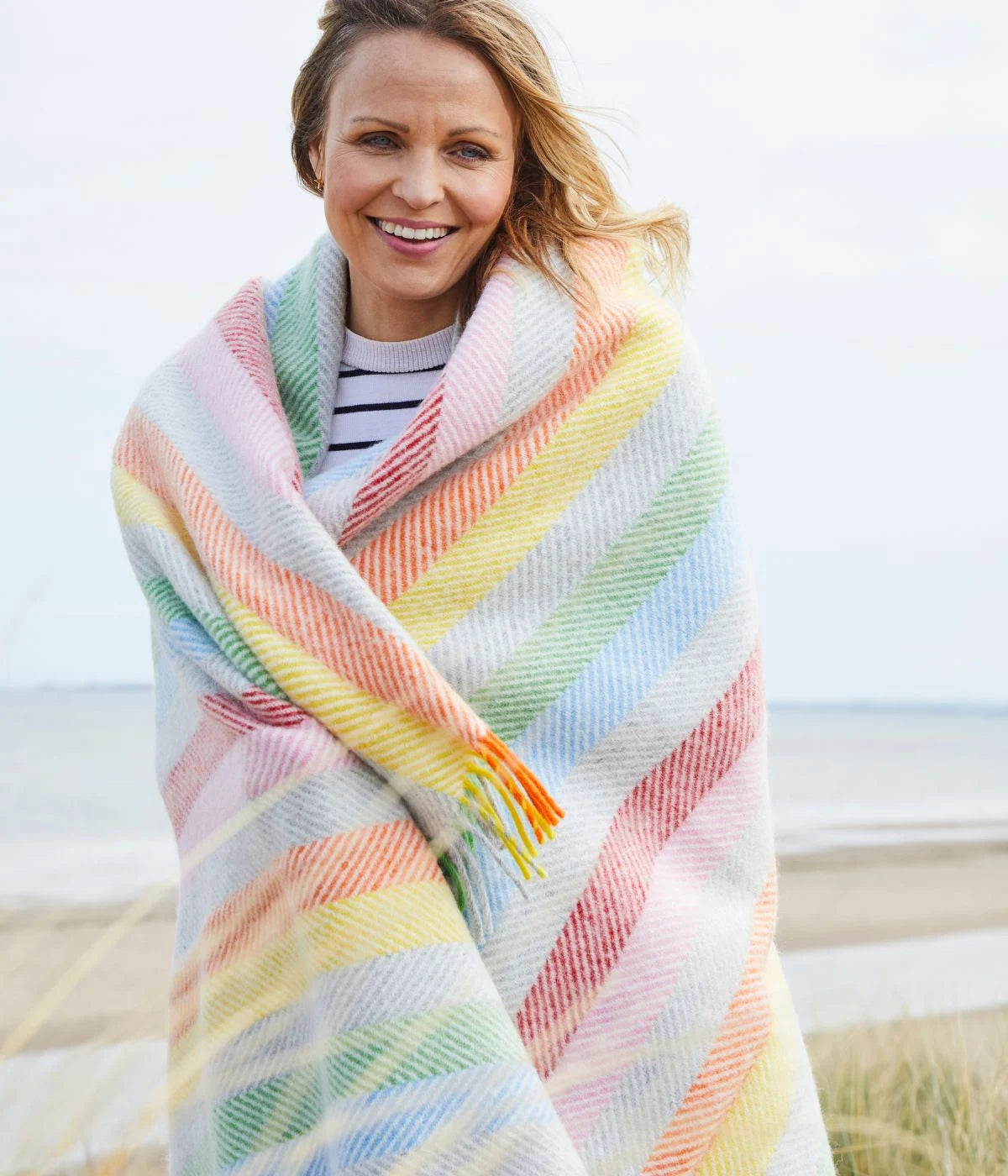
But it is undoubtedly in soft textiles, those that we touch, that the Prince of Wales becomes most endearing. As a throw, it takes on a new dimension. It is no longer just about style, but about sensation. The lines soften, the shades blend, the pattern becomes a visual and tactile caress.
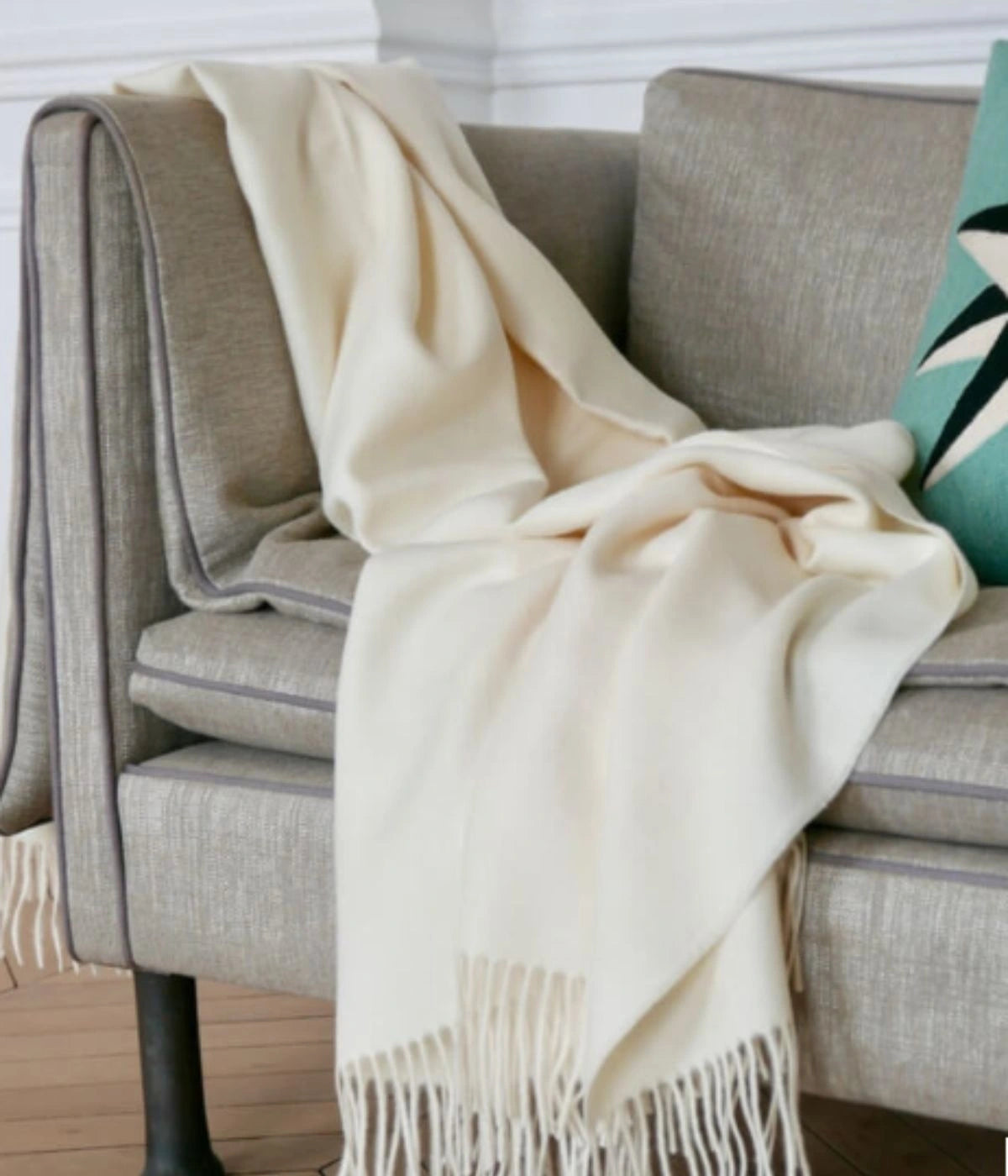
Imagine a natural linen sofa, a throw in ecru and charcoal English wool plaid casually placed on the armrest. Or a bed with immaculate sheets, on which rests a Prince of Wales pattern throw, like a nod to a London hotel room. The effect is immediate: texture, character, but also warmth and comfort.
The Prince of Wales, in this context, becomes an everyday companion. It warms, envelops, reassures. It structures a space while nurturing the atmosphere.

English-style cocooning: an art of living full of contrasts
What makes this pattern so captivating is its ability to embody opposites. It is both masculine and universal, classic and modern, strict and soft. It can evoke dark wood libraries as well as minimalist living rooms with clean lines.
Pairing a Glen Check or Prince of Wales throw with natural materials – light wood, raw ceramics, washed linen – creates a soothing contrast. The pattern then brings a graphic, almost architectural dimension, where the material suggests softness. A play of balances that tells something about our time: the need for grounding, for genuine textures, for calm beauty.
What if English-style cocooning had found its emblem?
At Plaid Addict: heritage woven into detail
At Plaid Addict, we love stories woven into fibres. The Prince of Wales pattern naturally finds its place here, as a bridge between textile heritage and gentle modernity. Our checked throws are inspired by this graphic elegance, without ever sacrificing comfort.
Each model is designed using noble materials – cashmere, merino, mohair – chosen for their softness, warmth and durability. The colours are understated, the finishes discreet. Nothing is garish; it's all about balance. These are pieces that transcend seasons, are passed down, and become cherished.
In a fast-paced world, a Prince of Wales patterned throw becomes a refuge object. A small everyday luxury, a gesture of self-care or care for loved ones.

Conclusion: a new elegance for our interiors
The Prince of Wales pattern is not just a style effect: it is a signature. It tells a story, that of a pattern born in the harshness of the Highlands, which became a symbol of English distinction, and is now reinvented in our homes as a chic and calming code. It combines aesthetics with sensation, line with material, history with the present.
Integrating a Prince of Wales throw into your interior is not simply adding a decorative piece. It's bringing a bit of history, craftsmanship, and controlled softness into your daily life. It's choosing slowness, beauty, and timelessness. It's, ultimately, cocooning with style.