



Throw Blanket Care Guide by Material
A beautiful throw is chosen for its softness, its warmth, its color... but also for its ability to last through the years. Wool, cashmere, alpaca, mohair, cotton, luxury fleece, and faux fur do not all require the same care.
To preserve the beauty of your throw, the first thing to do is always to consult the care label. Each material has its specific characteristics, and some finishes may require special precautions. Here are our simple tips for caring for your throw based on its material.
1. How to care for a wool throw?
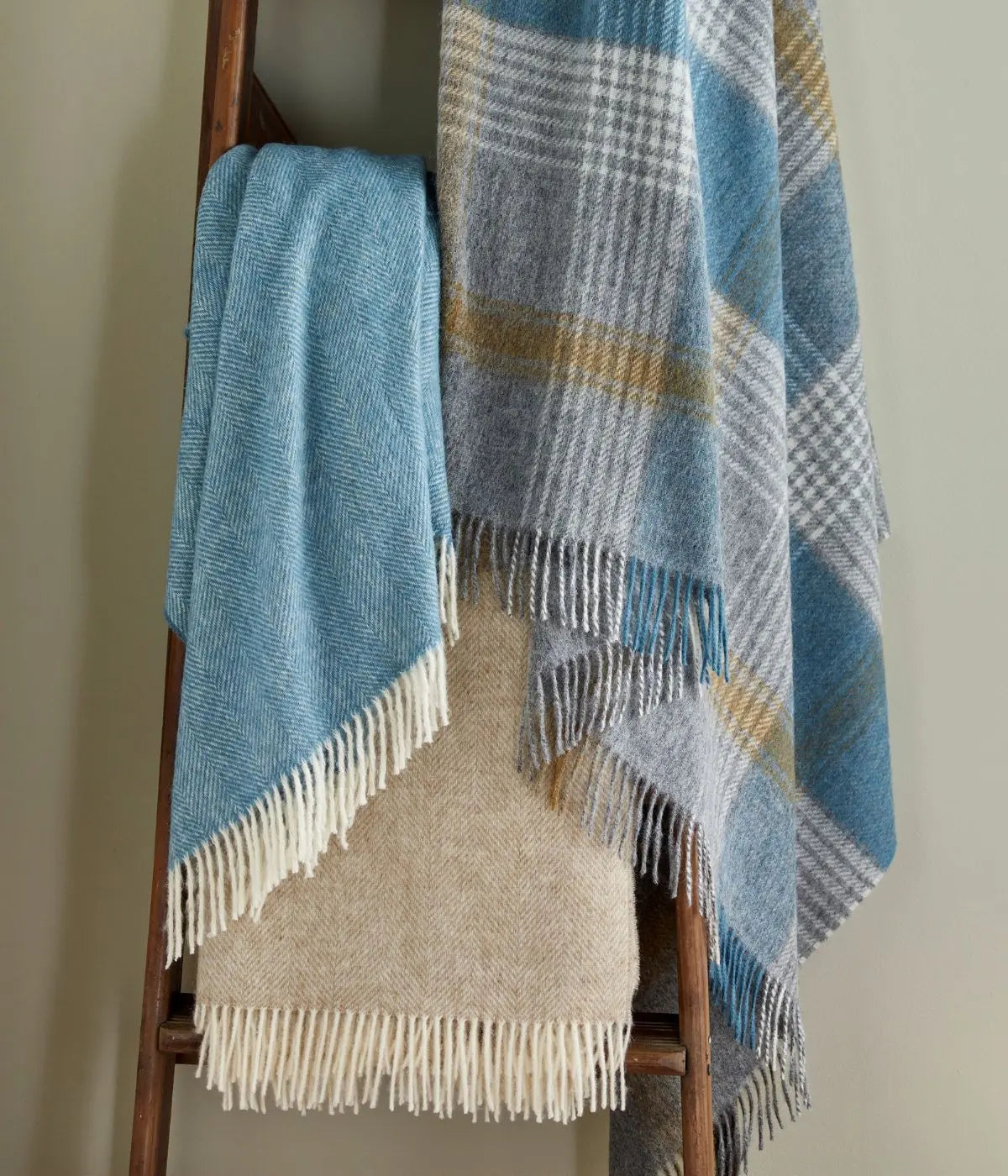
Wool is a natural fiber that has the advantage of not retaining odors much. Therefore, it doesn't need to be washed too often. The simplest way is to air it out regularly, flat or on a chair, in a well-ventilated room.
In case of a stain, it's best to act quickly with a clean, slightly damp cloth, without rubbing too hard to avoid felting the fiber. For a complete cleaning, we generally recommend dry cleaning, especially for high-end wool throws.
Avoid: hot water, tumble dryer, strong wringing, and repeated rubbing.
→ Discover our selection of pure wool throws.
2. How to wash a cashmere throw?
Cashmere is a precious, soft, and delicate material. It requires particularly careful maintenance. To maintain its fluffiness and suppleness, it is best to limit washing and prioritize airing.
If the label allows, hand washing can be considered with cold water, using a special wool or cashmere detergent. The throw should never be twisted. It should be pressed gently in a towel, then dried flat, away from a direct heat source.
For large cashmere throws or very precious items, professional cleaning remains the safest solution.
→ Discover our selection of cashmere throws.
3. How to care for an alpaca throw?
Alpaca is a very warm, light, and soft natural fiber. Like wool, it doesn't need to be washed frequently. Good aeration is often enough to refresh it.
To avoid breaking the fibers, the throw should be handled gently. In case of a stain, gently dab with a clean, slightly damp cloth. Avoid rubbing, as this can alter the appearance of the material.
Dry cleaning is often recommended to preserve the beauty of alpaca throws, especially when they are thick, brushed, or very fluffy.
→ Discover our selection of alpaca throws.
4. How to care for a mohair throw?
Mohair is a luminous, warm, and airy fiber. Its slightly vaporous appearance is part of its charm, but it requires some precautions.
It is advisable to air it out regularly and gently shake it to restore its volume. Machine washing should be avoided, unless very clear instructions to the contrary are on the label. To preserve its fluffiness, dry cleaning is generally preferable.
If some fibers shift over time, it's normal: mohair is a living material. Just avoid excessive rubbing, especially on areas of intense use like armrests or sofa backs.
→ Discover our selection of mohair throws.
5. How to wash a cotton throw?
Cotton is often easier to care for than animal fibers. Depending on the model, it can generally be machine washed at a low temperature, with a mild detergent.
It is preferable to choose a delicate cycle, wash similar colors together, and avoid high temperatures, which can cause slight shrinkage or dull the colors.
Air drying is recommended. To maintain a nice drape, you can reshape the throw when it is still slightly damp.
→ Discover our selection of cotton throws.
6. How to care for a luxury fleece throw?
Luxury fleece is appreciated for its great softness, warmth, and ease of care. According to the label instructions, it can generally be machine washed at a low temperature, on a gentle cycle.
Use a delicate detergent and avoid harsh products. It is best not to use fabric softener, as it can alter the softness and feel of some synthetic or blended fibers.
Air drying is ideal. Avoid hot tumble drying, which can flatten the fibers or alter the appearance of the throw.
→ Discover our selection of luxury fleece throws.
7. How to wash a faux fur throw?
Faux fur requires gentle care to maintain its fluffy appearance. If the label allows machine washing, choose a delicate cycle, cold or at a low temperature, with a mild detergent.
After washing, it is important to let the throw air dry naturally, flat or on a drying rack, without excessive heat. Once dry, you can shake it gently to restore volume to the fur.
Avoid: hot tumble drying, ironing, and overly vigorous rubbing.
→ Discover our selection of faux fur throws.
8. How to care for a velvet throw?
Velvet is an elegant material that catches the light beautifully, but it can mark more easily than other fabrics. To care for it, avoid folding it always in the same place and gently shake it from time to time.
In case of a small stain, dab with a clean, slightly damp cloth. Do not rub, as this could alter the pile direction or create a mark.
Depending on the composition of the velvet, washing may vary. It is therefore essential to follow the product's care label.
→ Discover our selection of velvet throws.
9. How to remove a stain from a throw without damaging it?
The right reflex is to act quickly. Dab the stain with a clean, absorbent cloth, without rubbing. Use very little water, especially on natural materials like wool, cashmere, alpaca, or mohair.
For greasy, colored, or old stains, avoid harsh stain removers. They can damage the fiber or alter the color of the throw. When in doubt, it is better to entrust the throw to a professional, especially if it is a precious material.
10. How to store your throw to keep it for a long time?
Before storing a throw, make sure it is perfectly clean and dry. Fold it without compressing it too much, then place it in a breathable cover, away from humidity and direct light.
For wool, cashmere, alpaca, or mohair throws, you can add natural moth protection, such as cedarwood or a lavender sachet.
Avoid closed plastic bags for long periods, as fine natural materials need to breathe. Gentle and careful storage helps preserve the beauty, suppleness, and warmth of your throw season after season.
In summary
A quality throw doesn't require complicated maintenance, but it deserves a few simple actions: airing it regularly, avoiding overly frequent washing, using mild products, and respecting the label's instructions.
Well-maintained, a throw retains its softness, drape, and warmth for many years. This is also the luxury of fine materials: items that you love to rediscover, season after season. Want to find your next characterful throw? Discover our selection of luxury throws or our sofa throws to tastefully dress up your interior.