


1. Throws with inimitable colors.
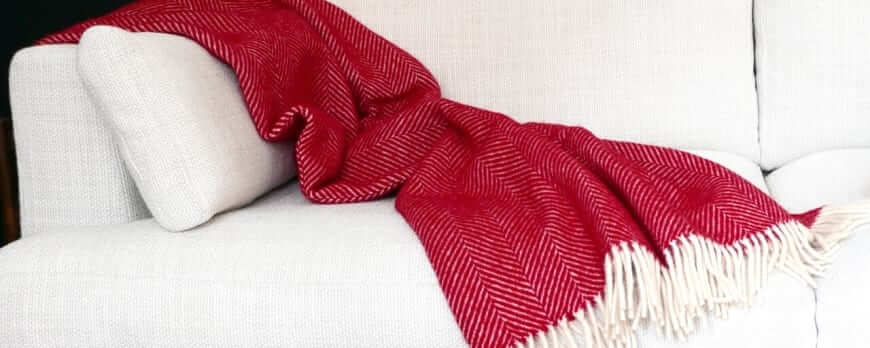
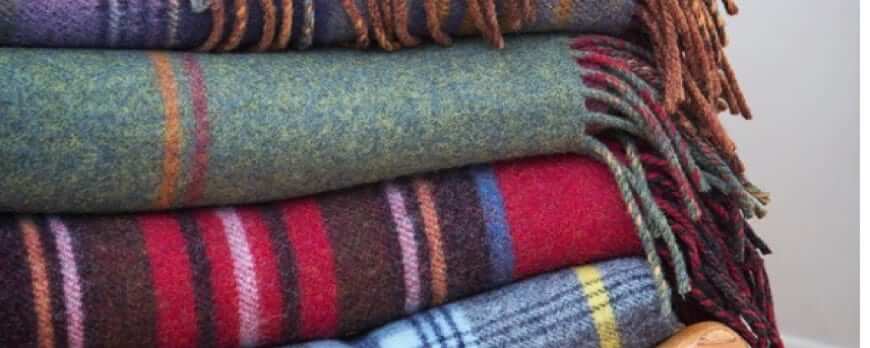
When we think of Scottish throws, we immediately imagine the great classics in red tones such as the Royal Stewart Scottish throw or the Dark Maple. There are also the authentic ones in blue and green tones like the Scottish Black Watch throw or the Antique Dress Gordon throw. And then there's the one whose tartan has become the emblem of the great British luxury house Burberry, the Camel Thomson throw.
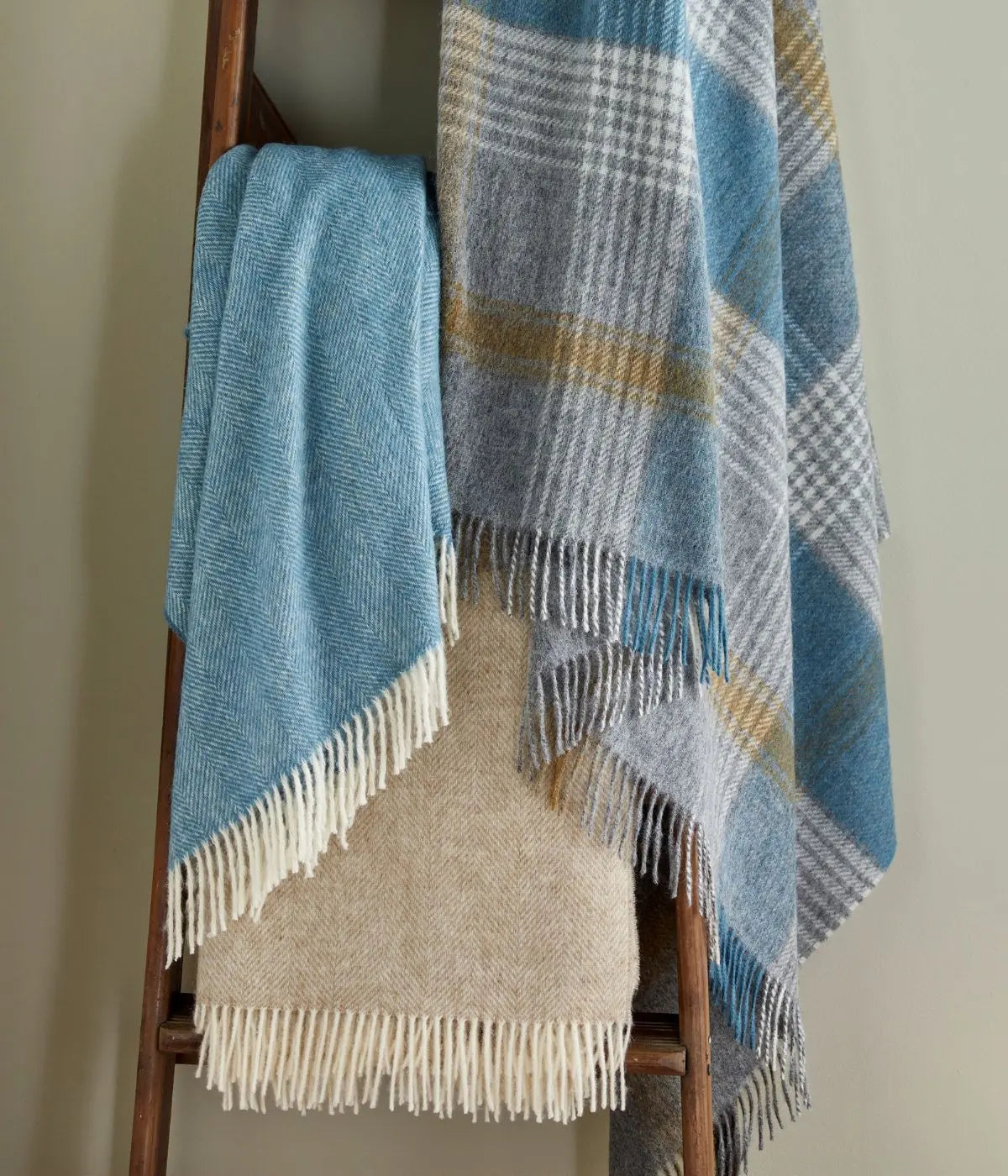
But this Celtic blanket is certainly not limited to these 5 variations; they are infinite. The Scottish throw reinvents itself every year with new and ever more successful color combinations. We love the new arrivals in sky blue and almond green tones, the heather tartans inspired by the wild landscapes of Scotland, and the pinks so beloved by Anglo-Saxons.
In short, the Scottish throw doesn't follow trends; it invites us to travel, and that's where its character comes from!
2. Scottish throws: exceptional wool throws crafted with expertise.
For many years, Scottish patterns have multiplied, winning us over again and again over time. It is the spinning mills in Scotland and England that best master these exceptional tartans, whose manufacturing secrets are passed down from generation to generation.
These companies knew from the beginning that they had to master the raw material. The quality of the wool is one of the pillars of the success of Scottish throws, and this essential element has never been lost sight of. From the carding of the wool to the folding of the throw, each manufacturing step is carefully executed to create high-quality wool blankets.
One of the largest Scottish spinning mills, Johnstons of Elgin, was founded in 1795. Their expertise is now recognized worldwide, which is why Johnstons supplies both major luxury brands and members of the British Royal Family.
3. The Scottish throw, symbol of the family home
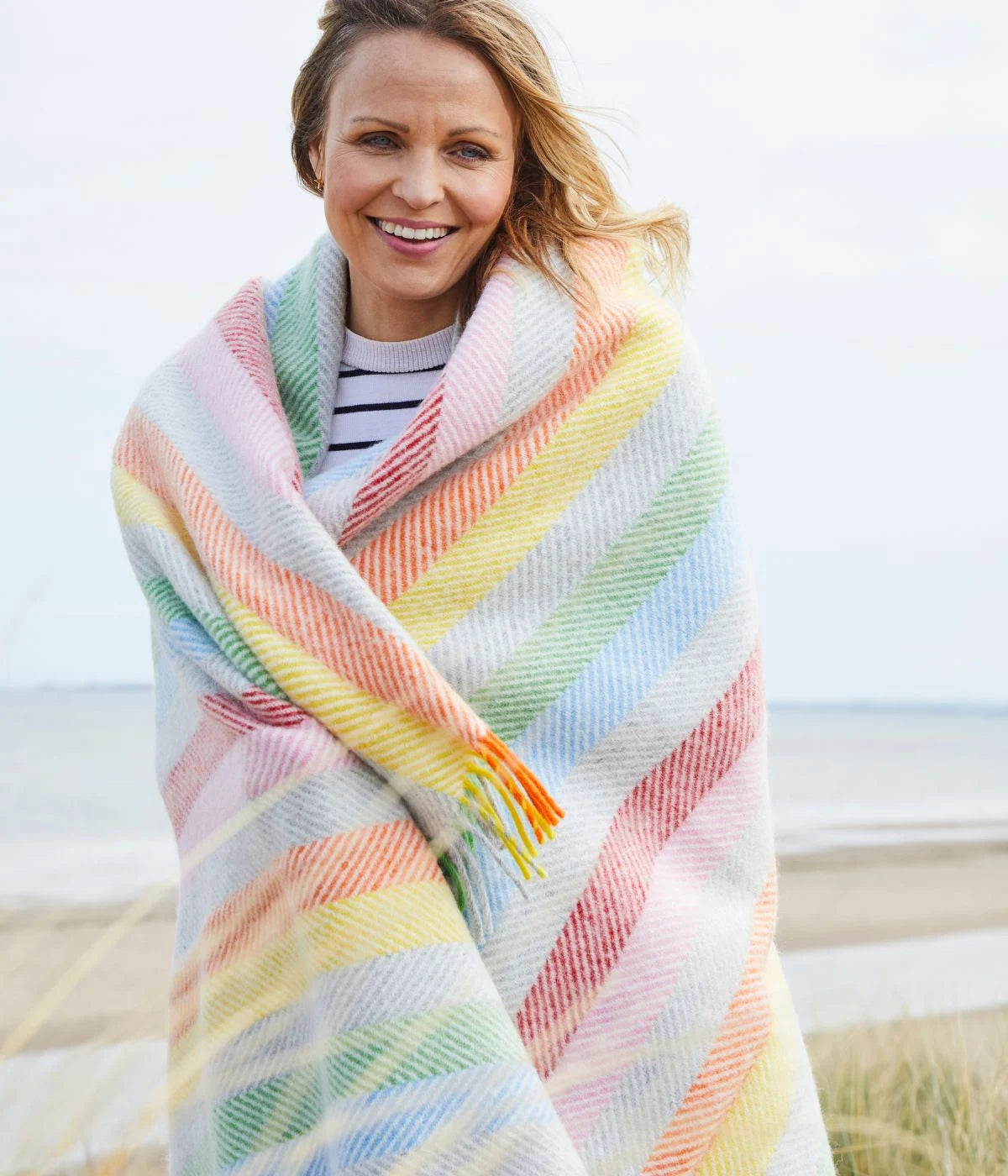
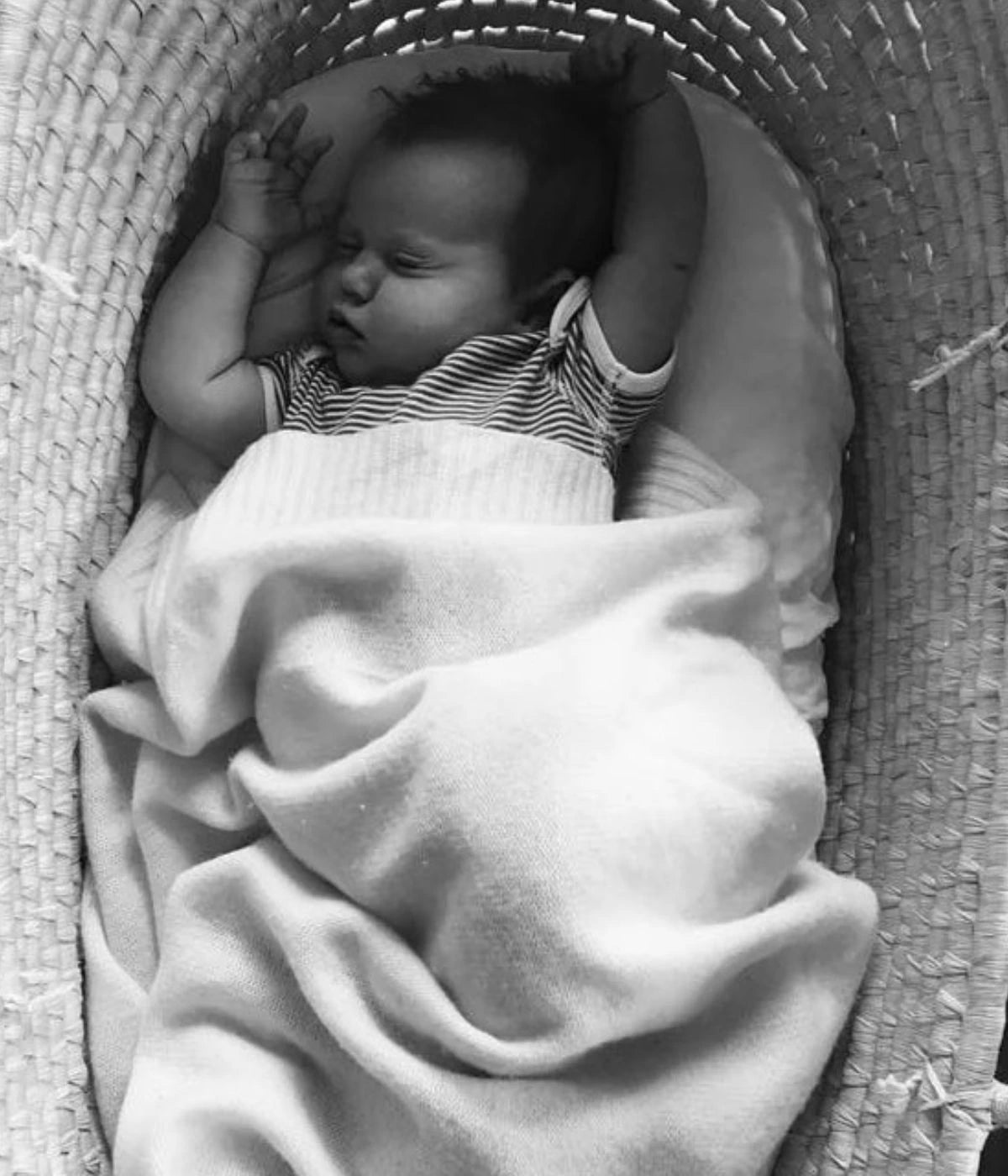
Scottish patterns were originally created to distinguish each individual's clan affiliation. Today, every family home has its own Scottish throw. Whether by the sea, in the countryside, or in the mountains, there's always one proudly displayed in the living room or neatly stored in a cupboard, ready to be unfolded to warm a chilly cousin or a newborn in their crib. It's draped over shoulders by the fireplace, used as an extra blanket in winter in not always well-heated bedrooms, or taken along for a picnic.
Far from being old-fashioned, the Scottish throw symbolizes family ties.