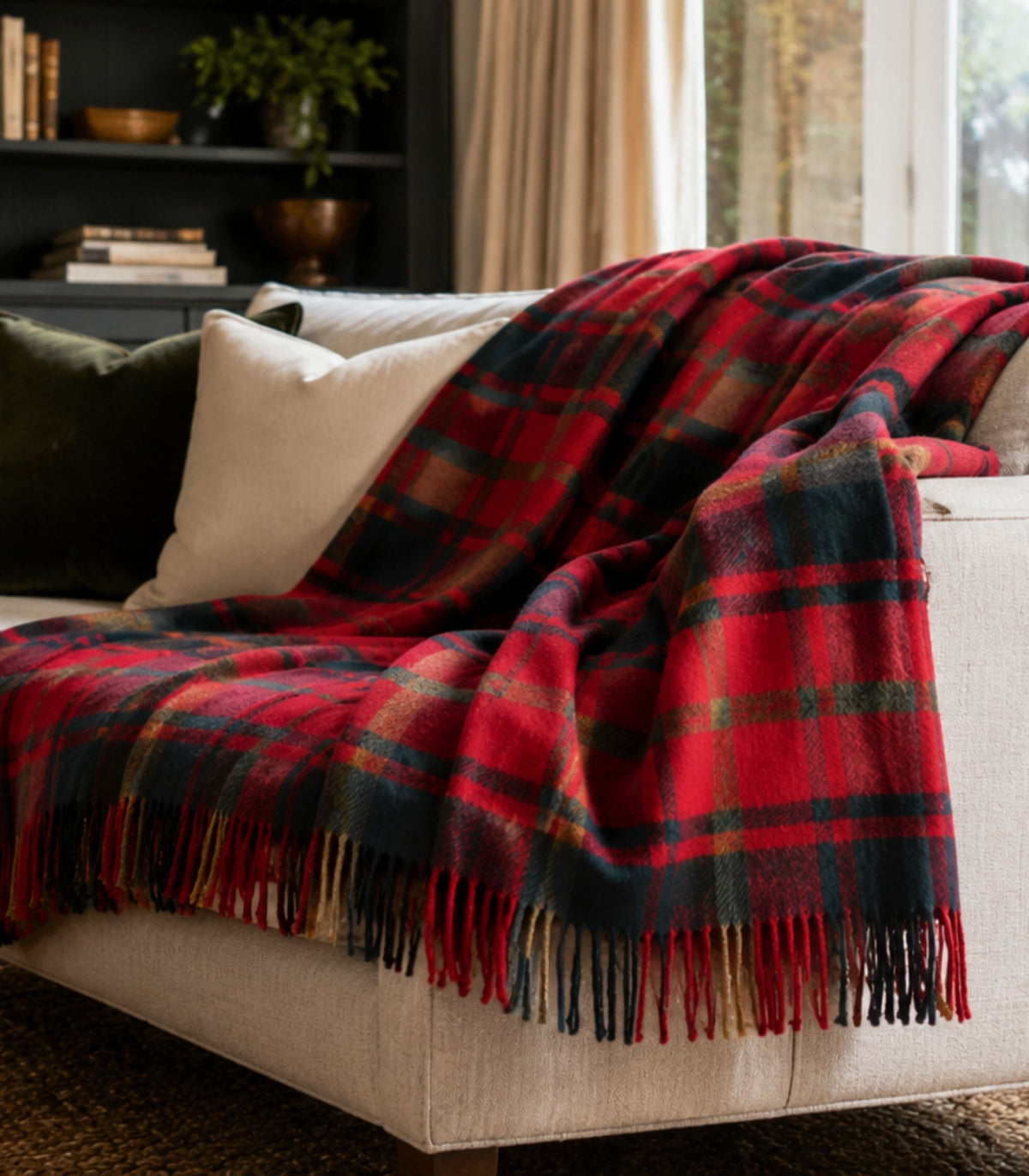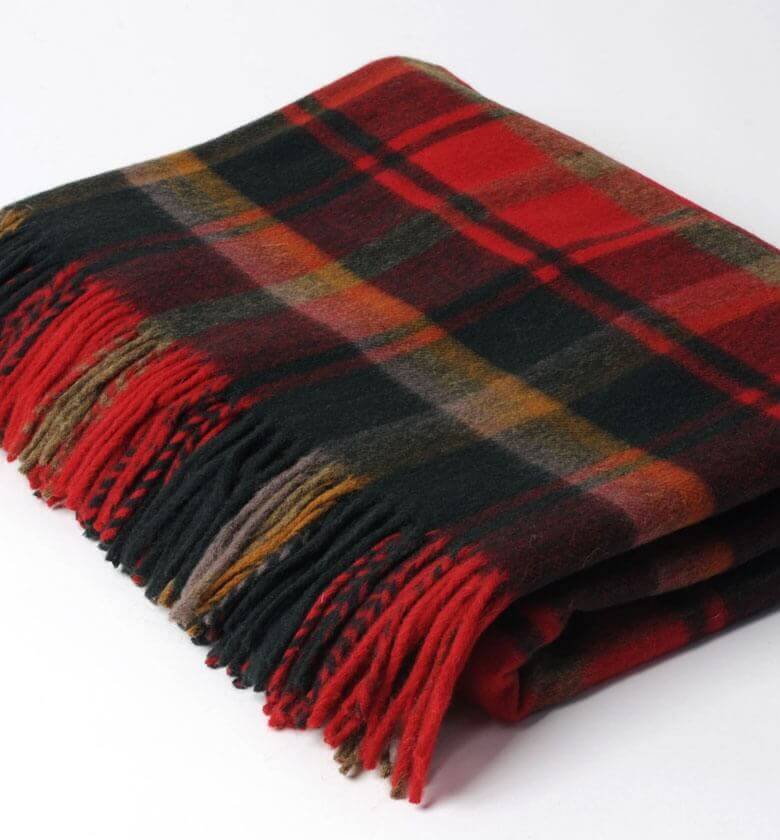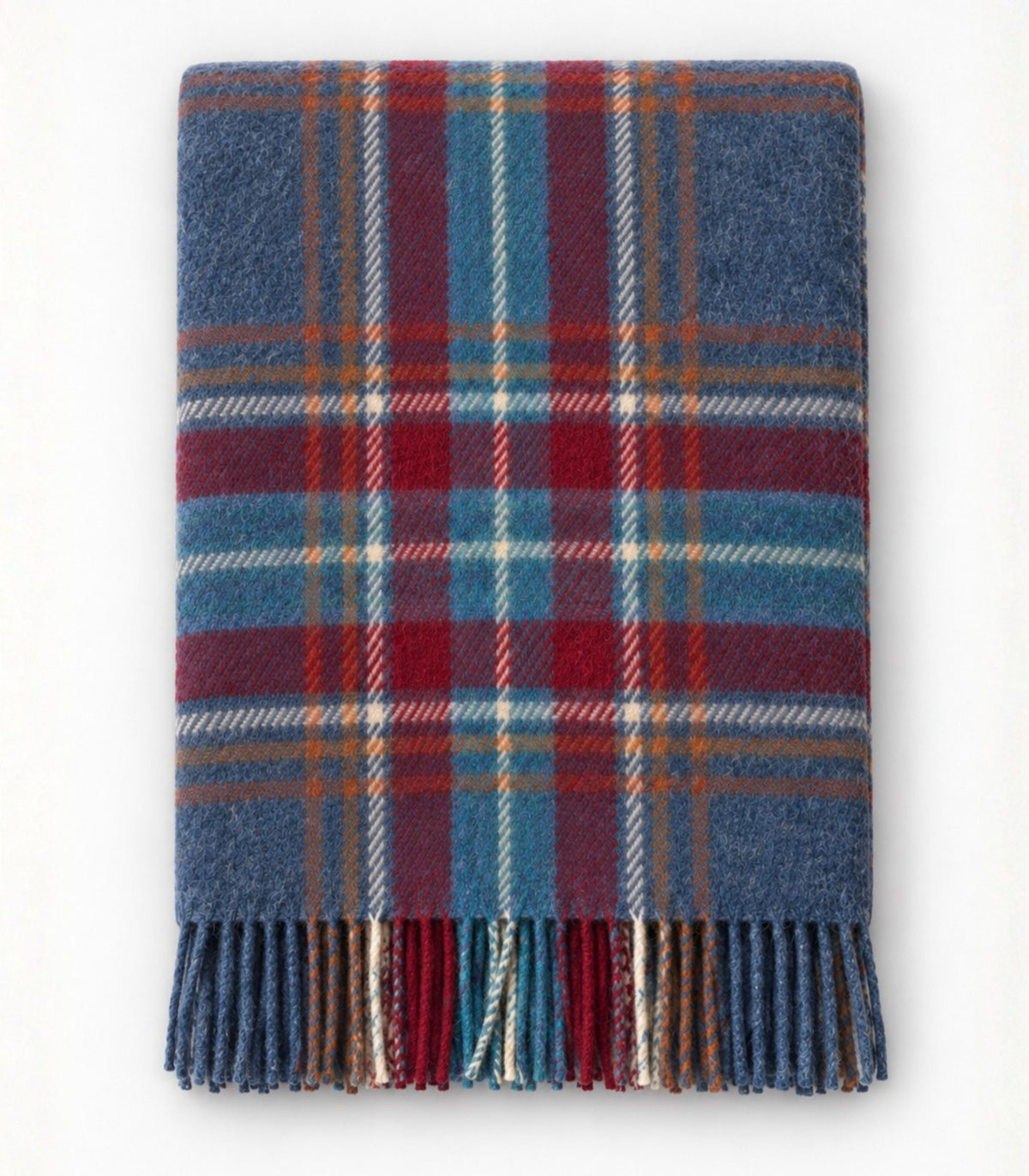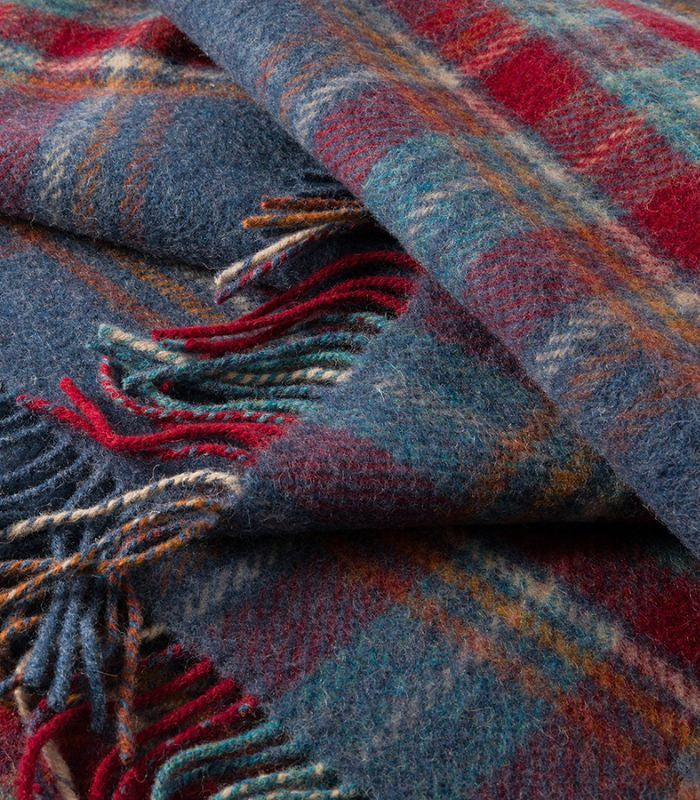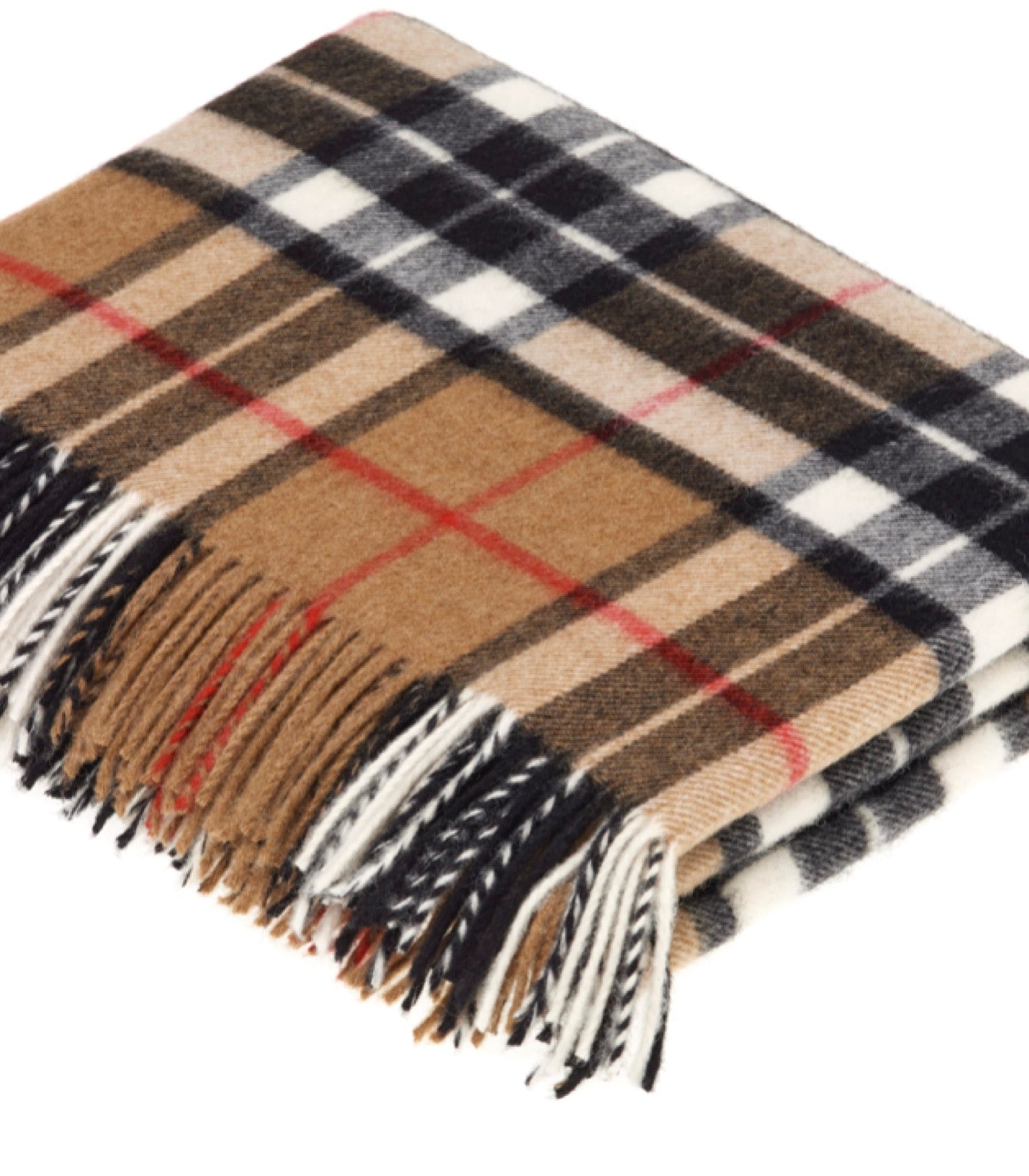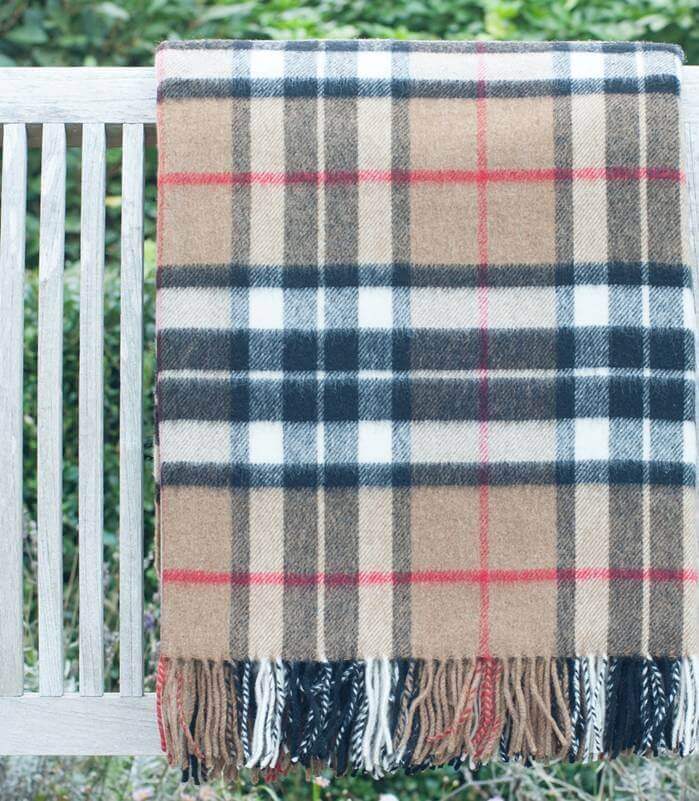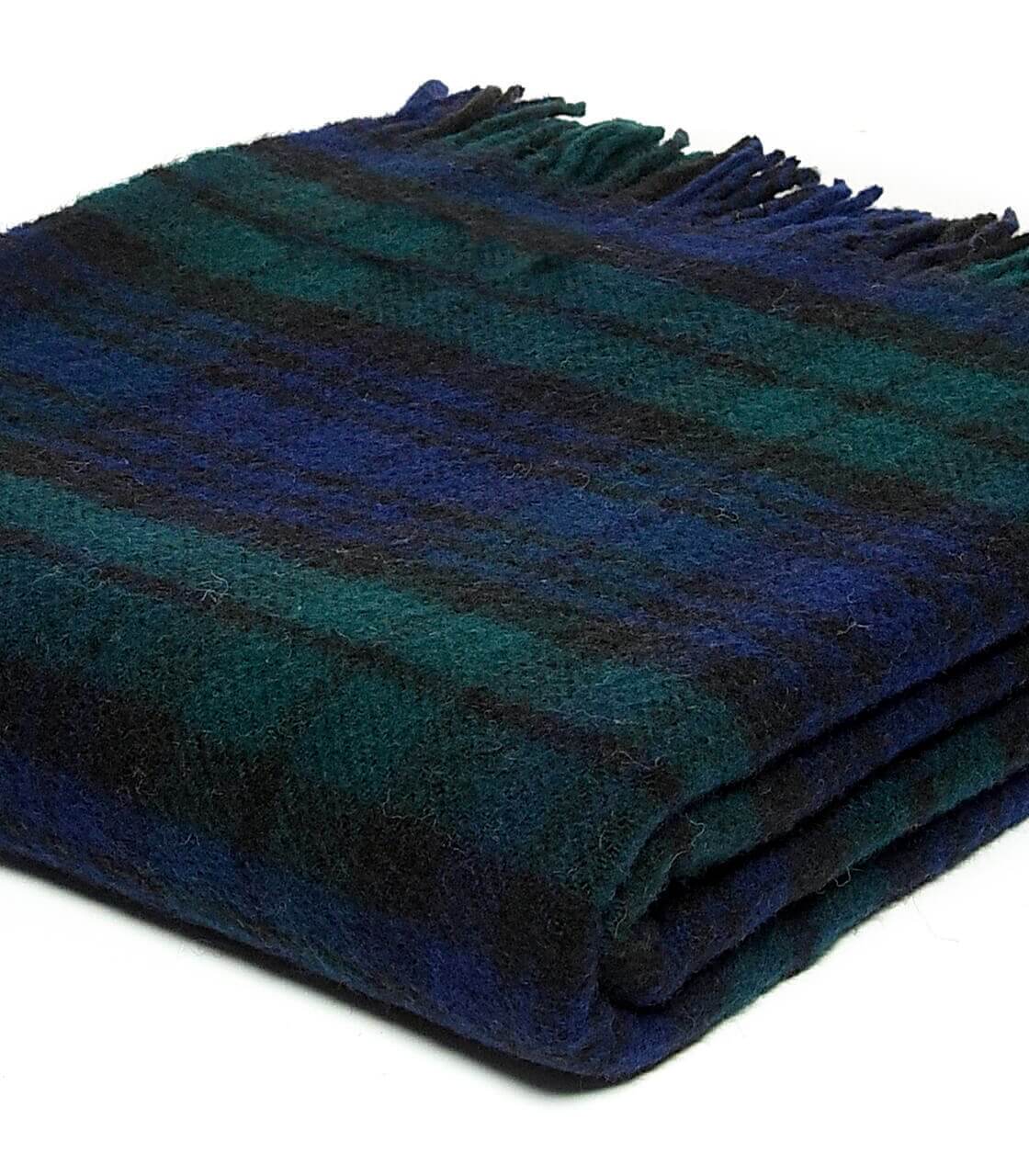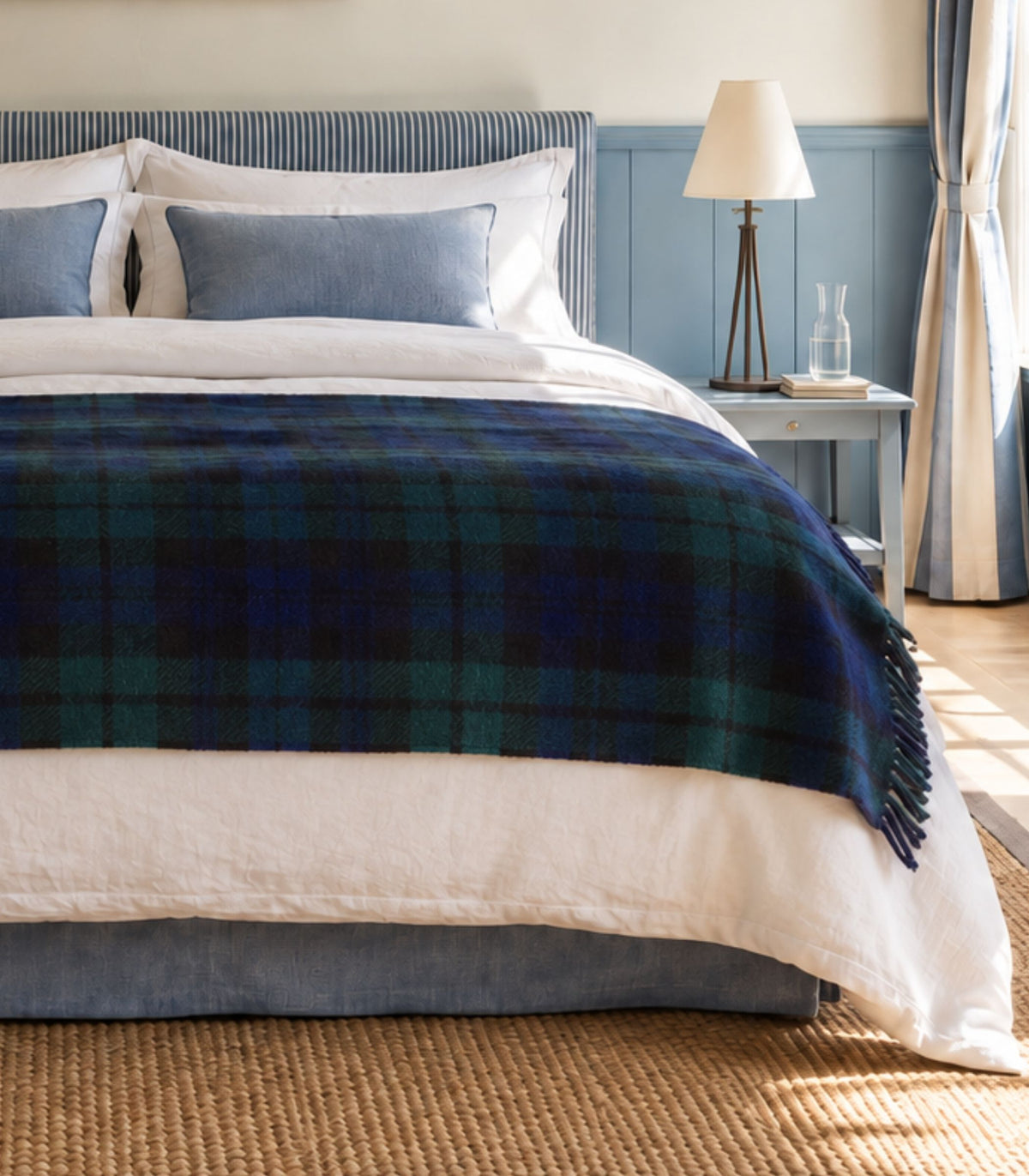

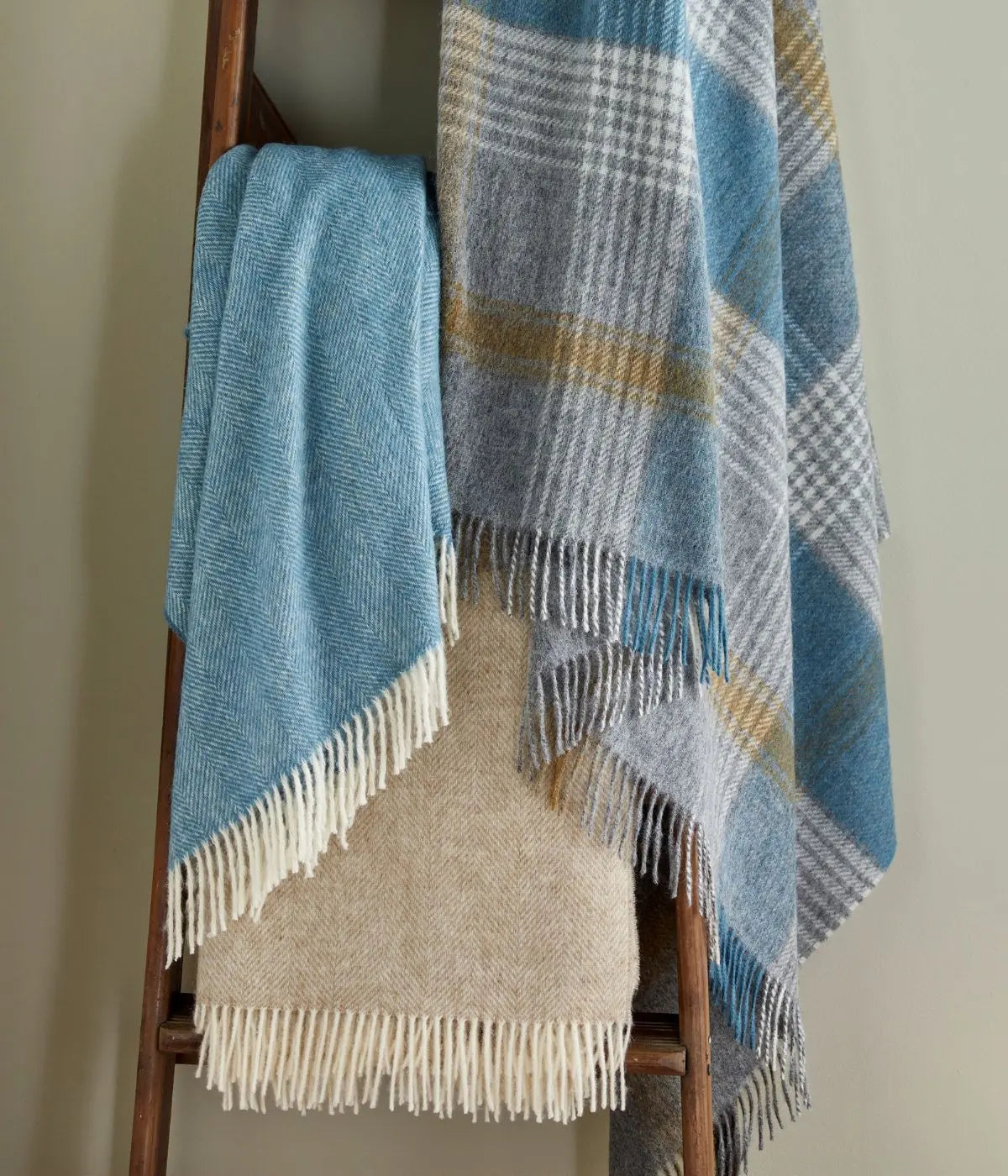
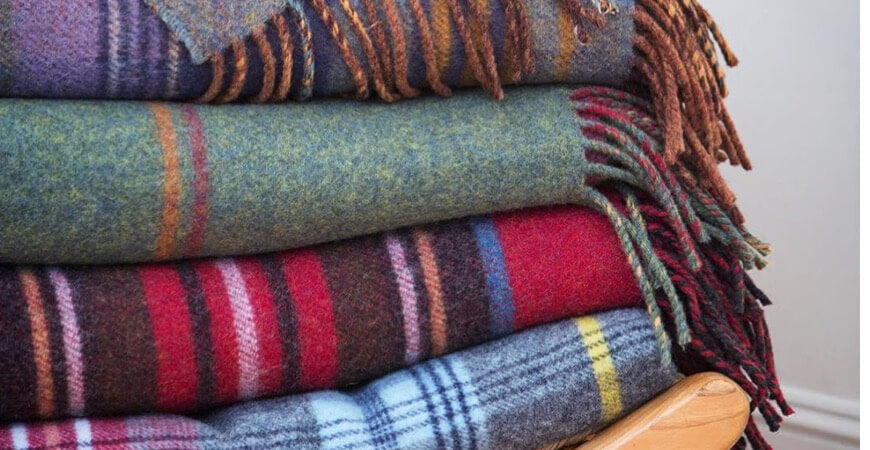
We all know the famous Scottish tartans, these iconic checkered fabrics woven from wool. Today, they can be found on our clothes, everyday objects, and interior decorations. These classic and timeless patterns come in many colors. Among the most famous are: the Royal Stewart red tartan, and the Black Watch green and blue tartan.
Each Scottish tartan symbolizes belonging to a clan. Stewart, Buchanan, Black Watch, Thompson, McKellar… discover the history of this ancestral heritage passed down from generation to generation.
1. What is the origin of the plaid?

The plaid originated in Scotland. This wool blanket was then used by Highland shepherds as a stole or blanket to brave the cool and rainy climate of the country. This fabric, also used to create kilts, is adorned with checks dyed with local plants. It is called the tartan. Passed down through generations, it has today become one of Scotland's emblems.
2. Tartan, a sign of clan belonging

Originally, tartan was a simple decorative fabric worn as daily attire by the inhabitants of the Highlands. At that time, clans were free to wear the tartan they liked, or rather, the one manufactured in their region. But over time, tartan became laden with history.
In the 18th century, various Scottish patterns, including tartans, began to designate clan affiliation. Each clan then had its own tartan, which could be identified by the colors and patterns in which it was dyed.
Although the term clan means "child," its members are not necessarily from the same family. Clans are actually formed by social and geographical ties, like an extended family with common ancestors.
The tartans we know today are therefore linked to a family name or to the region where the ancestors lived.
3. A Scottish pattern for every clan

There is a very large number of tartans with very varied colors and lines. The shades of these were originally chosen according to the natural elements found in the region of the clan in question. Subsequently, the invention of dyes led to a wider variety of shades, which allowed for the creation of new tartans.
Some clans even have several variations of their original tartan, with changes in color or lines. These could be intended for special occasions or signify belonging to one of the branches of the same clan.
4. The wool plaid, an ancestral heritage that became a symbol of Scotland
In 1746, the wearing of the kilt and tartan was banned by the "Dress Act." The government thus intended to control the clans following the Jacobite uprising. Nearly 40 years later, the kilt was again authorized and became a strong symbol of Scottish identity, worn with pride.
Many years later, some lost patterns were recreated from writings and photos to preserve this heritage. The majority of tartans are now registered in the Scottish Register of Tartans, which currently lists over 7000. These Scottish patterns make it possible to trace the history of each clan through historical research.
Over the years, tartan has become more widespread. This former masculine accessory is now also worn by women and is used to decorate interiors worldwide. The Scottish plaid has become a true essential. Even if the charm of the great classics continues to appeal, many variations are emerging. One thing is certain, the enthusiasm for Scottish tartans is not likely to fade!
5. The history of 3 world-renowned Scottish plaids
# Royal Stewart Scottish Plaid

The Royal Stewart Scottish tartan is undoubtedly the most famous. And for good reason, it is a royal tartan! It belonged to the Stewart family, who reigned over Scotland with the motto: "Courage grows stronger with wounds."
This red tartan with yellow, black, and blue lines is today the personal tartan of Queen Elizabeth II.
The founder of the House of Stewart, Walter Fitzalan, was Breton. Due to his devotion and service to King David I, he was granted the title of great royal steward, or "stewart," as well as vast lands which he passed down from father to son. The name Stewart was later Gallicized to "Stuart" by Queen Mary Stuart.
Wearing the Royal Stewart red tartan requires explicit authorization from the Queen. Yes, you read that right. In theory, only the royal family and officials are authorized to wear this tartan. But rest assured, its popularity has eventually made it universal.
"Just as clansmen wear their chief's tartan, it is fitting for all subjects of the Queen to wear the Royal Stewart tartan. " (Scottish Register of Tartans)
The Royal Stewart tartan has 4 variants: the Old Stewart, the Hunting Stewart, the Black Stewart and the Dress Stewart.
The Dress Stewart tartan is the version of the Royal Stewart tartan where the red has been replaced by white. Traditionally, this tartan is worn by the women of the royal family on special occasions.

# Black Watch Plaid

The Black Watch tartan is also famous worldwide. But do you know its history?
This tartan with green, blue, and black lines is in fact a symbol of the United Kingdom's military history. It refers to the Highlanders regiment, the "Black Watch," whose members fought in kilts until World War I.
This regiment, which included members from several clans, was formed in 1725 to maintain peace in the Highlands. Legend has it that the name "Black Watch" was given to it by the inhabitants of the Highlands. It is said to refer to the "black heart" of the regiment's members, who were tasked with enforcing the decisions of the English power against the Scottish clans to prevent any new rebellion. This name is therefore linked to a feeling of betrayal expressed by the Highlanders towards the regiment, which itself originated from the Highlands.
The Black Watch subsequently fought in numerous battles and wars, including World War I and World War II.
According to tradition, the Black Watch tartan can be worn by everyone. It is a "standardized" tartan that requires no authorization. It is also the only tartan that was not banned by the Dress Act in 1746.
# Buchanan Plaid

The origins of the Buchanan clan date back to Sir Absalon, an ecclesiastic from the 11th century.
The Buchanans occupied the shores of Loch Lomond for nearly 600 years, until the death of their 22nd chief in 1682. The clan notably participated in the Scottish Wars of Independence with the motto: "Henceforth, honor shall always grow brighter."
The Buchanans had a lot of influence in Scotland. And for good reason, they had a connection to the royal family since the marriage of Sir Walter Buchanan to Isabel Stewart, great-granddaughter of King Robert II of Scotland.
Following the death of the 22nd clan chief in 1682, who had no heir, the Buchanan clan found itself without a recognized chief. It would take until 2018 for the Buchanan clan to find a new chief. John Michael Baillie-Hamilton Buchanan was officially recognized as chief of the Buchanan clan after many years of genealogical research. It was proven that he is a descendant of Francis Buchanan of Arnprior, a Buchanan who participated in the Jacobite uprising and was executed for treason.
This story illustrates the complexity and richness of Scottish heritage. Each tartan has its own history that cannot be summarized in a few lines. Scottish clans and tartans continue to fascinate many, and numerous descendants are interested in the history of their ancestors. You may even be a descendant of a Scottish clan yourself?
We are proud to offer a collection of Scottish plaids that perpetuate this beautiful tradition >