

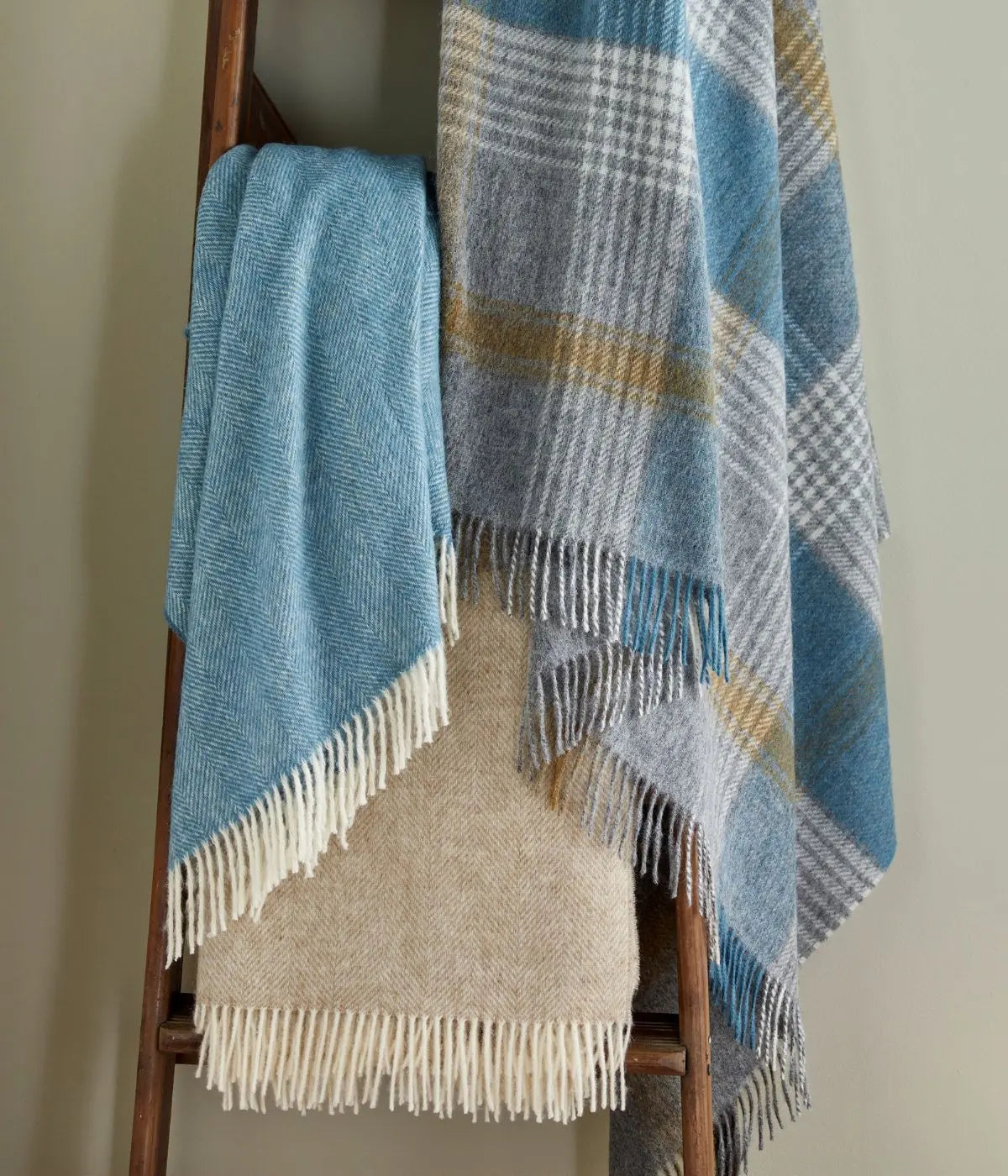
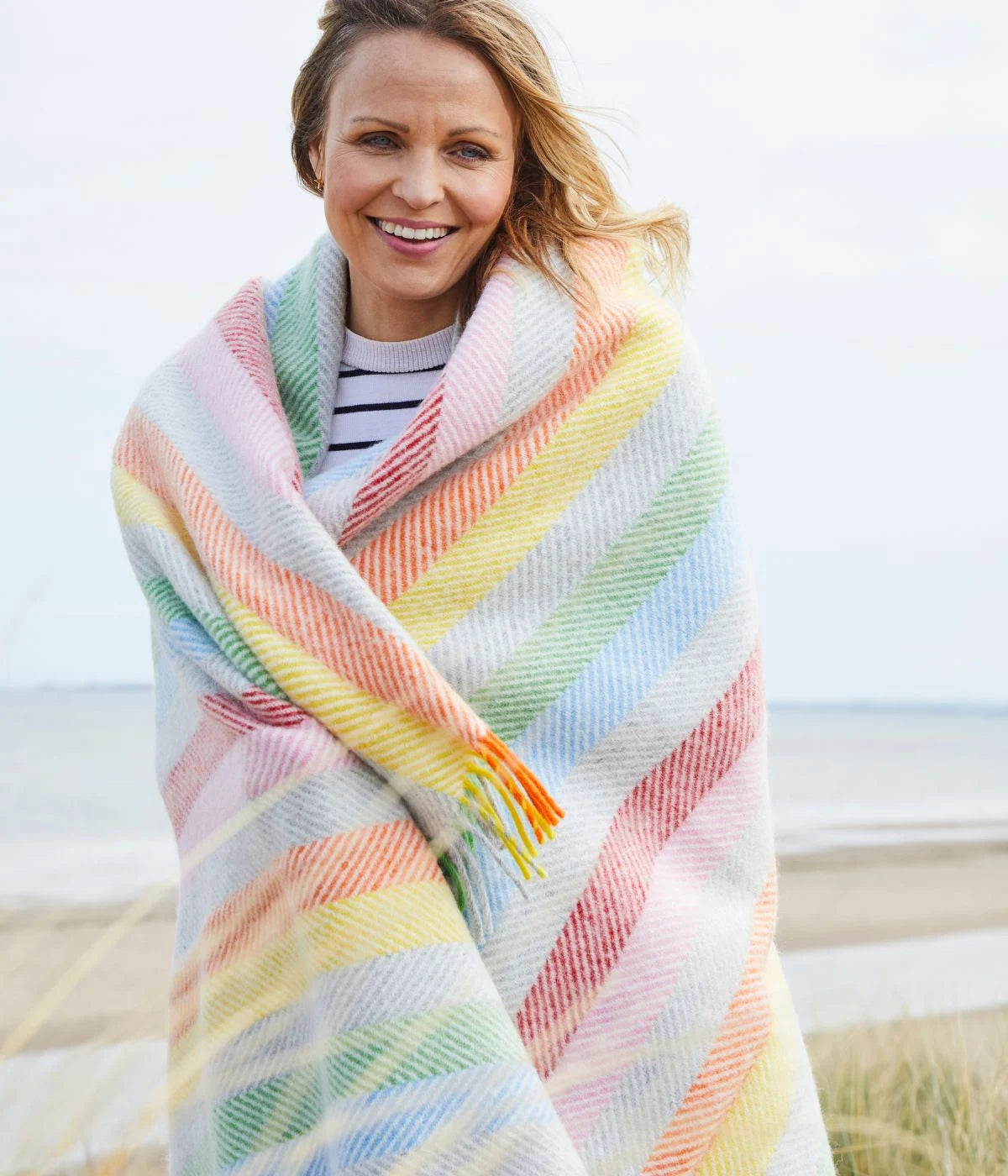
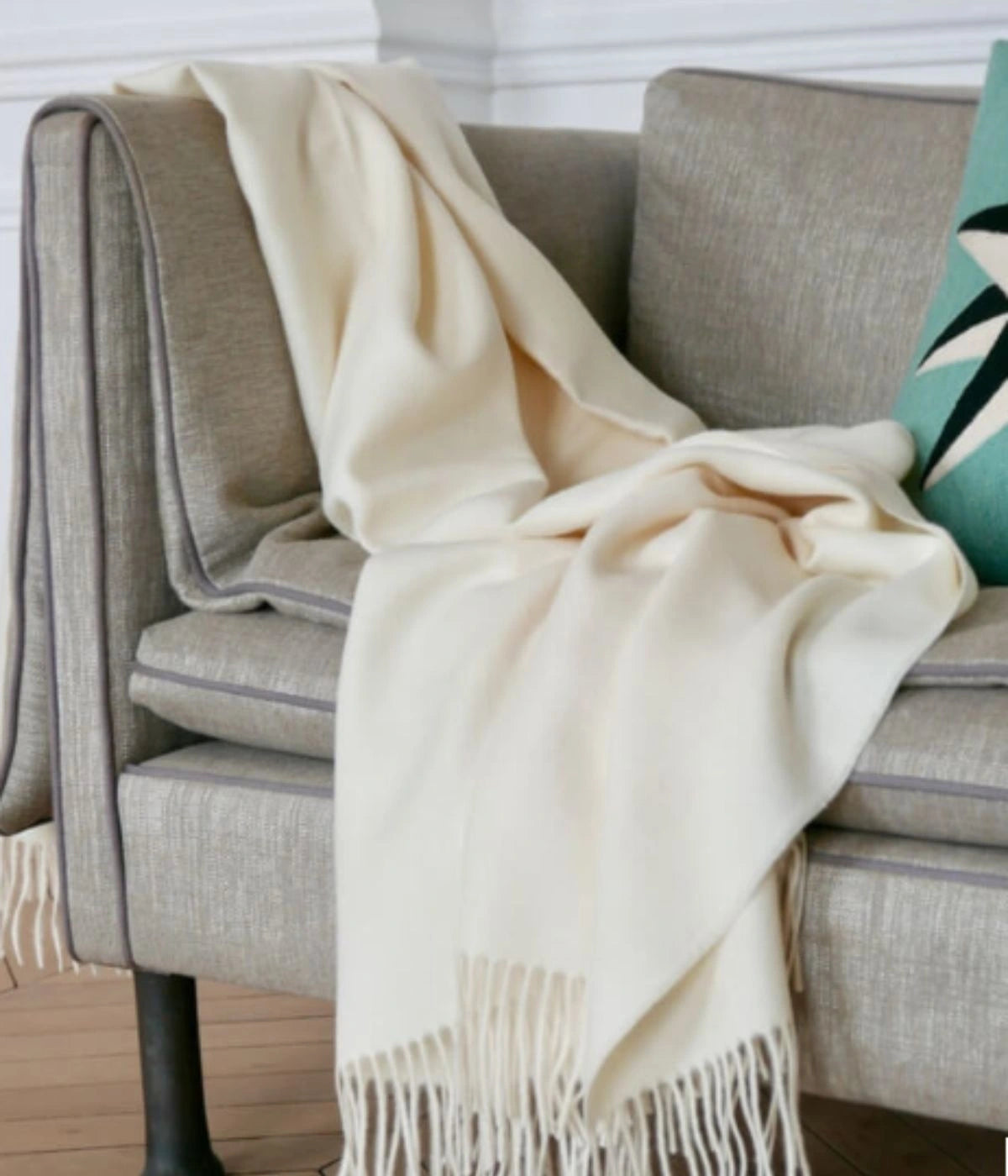


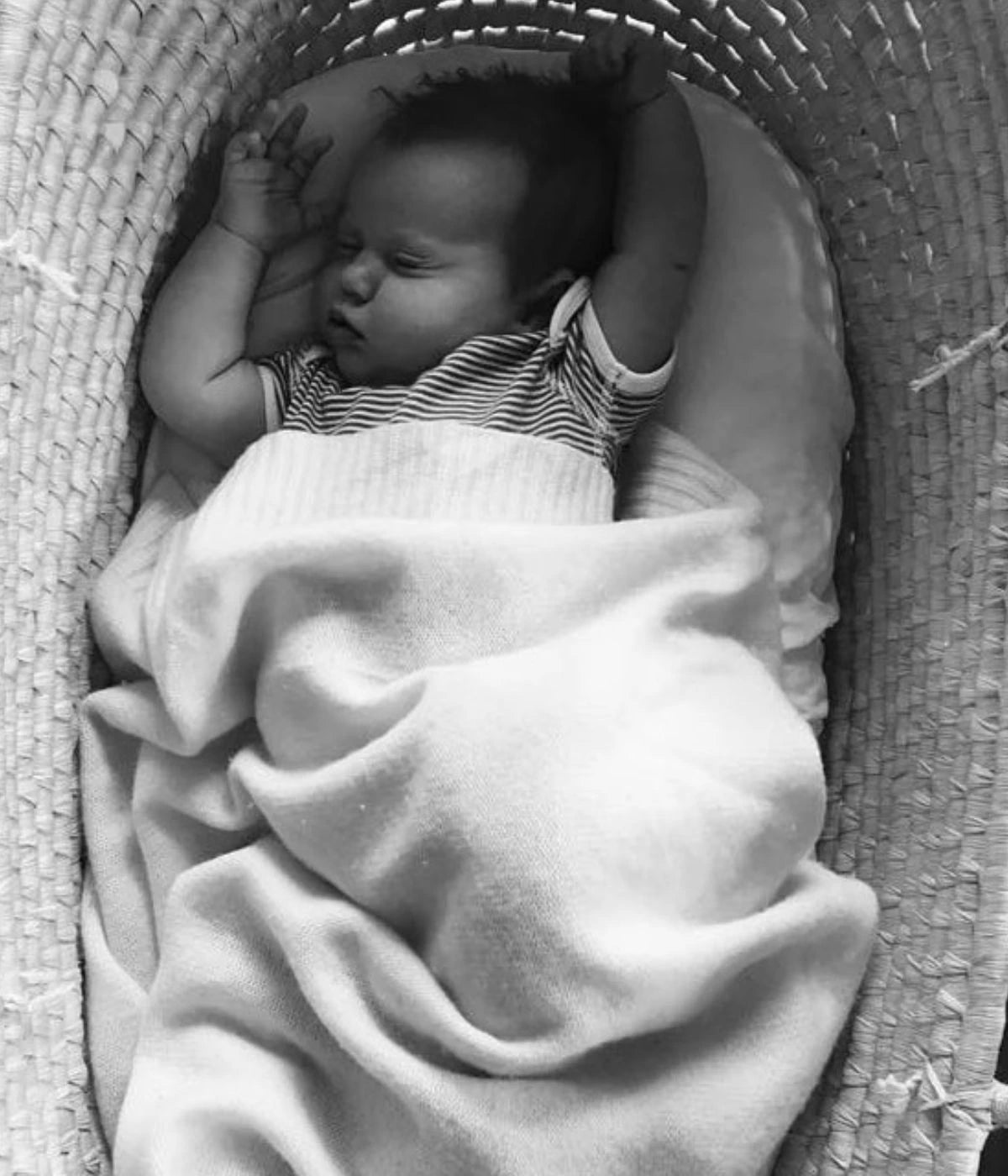
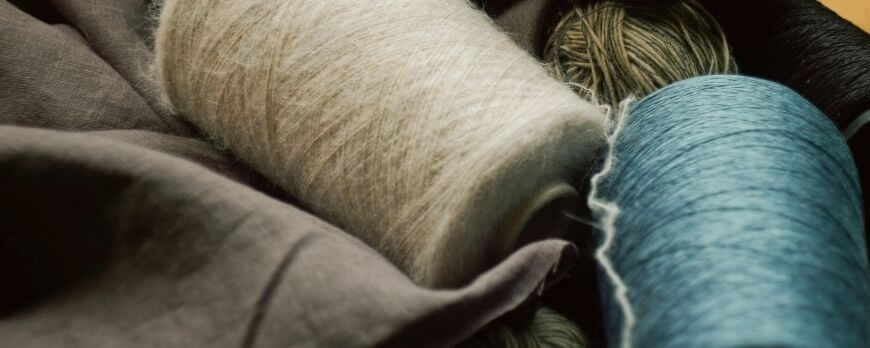
An essential item that we couldn't do without, the wool throw is the ideal accessory for your cozy breaks. With its soft and pleasant texture, we love to snuggle up in it. It brings us warmth and comfort during our winter evenings. The secret to its softness and comfort lies in its manufacturing process. Discover now the 9 steps of making a wool throw: from the reception of the raw material to the final touches.
Step 1: Choosing quality wool
The process begins with the selection of raw materials. To weave a quality throw, you need to choose quality wool from healthy animals that follow specific diets. It is also important to ensure that the wool does not contain too many impurities.
The main wool producers worldwide are: Merino wool mainly comes from New Zealand, cashmere mainly from Mongolia, and alpaca wool from Peru and Chile.
Step 2: Dyeing
Once the raw wool is delivered, it is then dyed using precise combinations of dye, pressure, temperature, and time. This step is very important because it is at this moment that the wool will take on more or less exceptional colors. It's all about nuance, and the color palette varies from one spinning mill to another depending on the techniques and expertise.
Step 3: The "clever" blend
Once the wools are dyed, they will then be blended. This involves mixing the desired types of wool (e.g., 100% Merino wool or 20% wool and 80% wool) and the desired colors. Sometimes up to 7 different colored wools are used to achieve the final color. It is this meticulous assembly that gives the different fabrics their unique and rich texture.
Some artisans we work with tell us that the secret to the exceptional colors of certain throws (Scottish throws in particular) lies in these two steps: dyeing and blending.
Also read: Three exceptional manufacturers make our Scottish throws
Step 4: Carding
Carding consists of transforming the wool into roving to make it into a ribbon or slivers that can then be spun. It involves carding or combing it, to use a more evocative term.
The carding machine consists of drums equipped with steel points. These drums rotate at high speed against the natural fibers to divide, align, and uniformize them. They also help to retain some residual impurities.
This step therefore consists of detangling the fibers and aerating them. It is crucial to achieve a soft and smooth fabric result. At the end of the process, the combed and teased fibers are wound onto a bobbin ready to be launched into a spinning machine.
Step 5: Spinning
The wool web is then spun into a wide range of yarns. Frames draw the wool, putting a precise number of twists into the wool, which creates a fine but strong yarn.
The yarn is then wound onto cones, passing through a control to ensure the continuity of the yarn's thickness. The cones can hold up to 16,000 m of yarn.
The bobbins obtained after spinning are not suitable for looms, so they must be transformed into bobbins with a more adequate shape.
Step 6: Warping
Warping consists of placing the longitudinal warp threads in the correct positions in the loom, respecting the pattern of the throw. This process can be complicated depending on the complexity of the throw's design. The weft and warp will then interweave during the weaving stage.
Step 7: Weaving
At this stage, the loom interweaves the weft threads with the warp threads. The technique varies depending on the desired outcome. The production tool will then weave a large number of meters of fabric at once. Several tens of meters are thus meticulously produced.
Step 8: Fulling
Washed and wrung out, the fabric is then fulled. This step will felt the fabric; it is essential for the hold of a beautiful, warm, and durable fabric, as well as to allow for the napping step.
Step 9: Drying
In the previous steps, the fabric remained damp so that it could be worked more easily, and before finishing, it must be dried to fix its final dimension.
Step 10: Finishing
At this point, the final appearance of the fabric begins to become apparent. Depending on the desired finish and the wool used, the fabric can be shorn for a velvet look, ruffled for a voluminous look, laid flat for a draped effect, or finally brushed to give more shine in the case of mohair wool. The fabric is finally carefully cut, the fringes are combed, and the labels are sewn. The blanket, which has gone through so many manufacturing steps, will finally be delicately folded and packaged.
It is by going through all these manufacturing stages that the throw finally finds its definitive form, the one that will keep you warm.
Discover our collection of wool throws.